Hi, I am Shaurav
After 32 years in the consulting, research, learning and development world, I recently stepped away. During those years I was always fascinated by the topic of how we learn, and how we retain and apply what we learn. Over time, especially in the organizational context, I realized that very little actual learning and transformation was happening through traditional training formats. What was missing and what I believe truly matters and makes a difference were two key factors: activation of learning curiosity and emotional relevance to why that learning mattered.
Almost everything I learned during my professional journey happened when someone or something sparked curiosity in me and when I felt the emotional (not just rational) urge to learn more. Once that happened there was no stopping me—I dove deep into the rabbit hole and tried to learn "that thing" or the topic unearthing every source, tool, and learning aid I could and creating ways to make that learning stick.
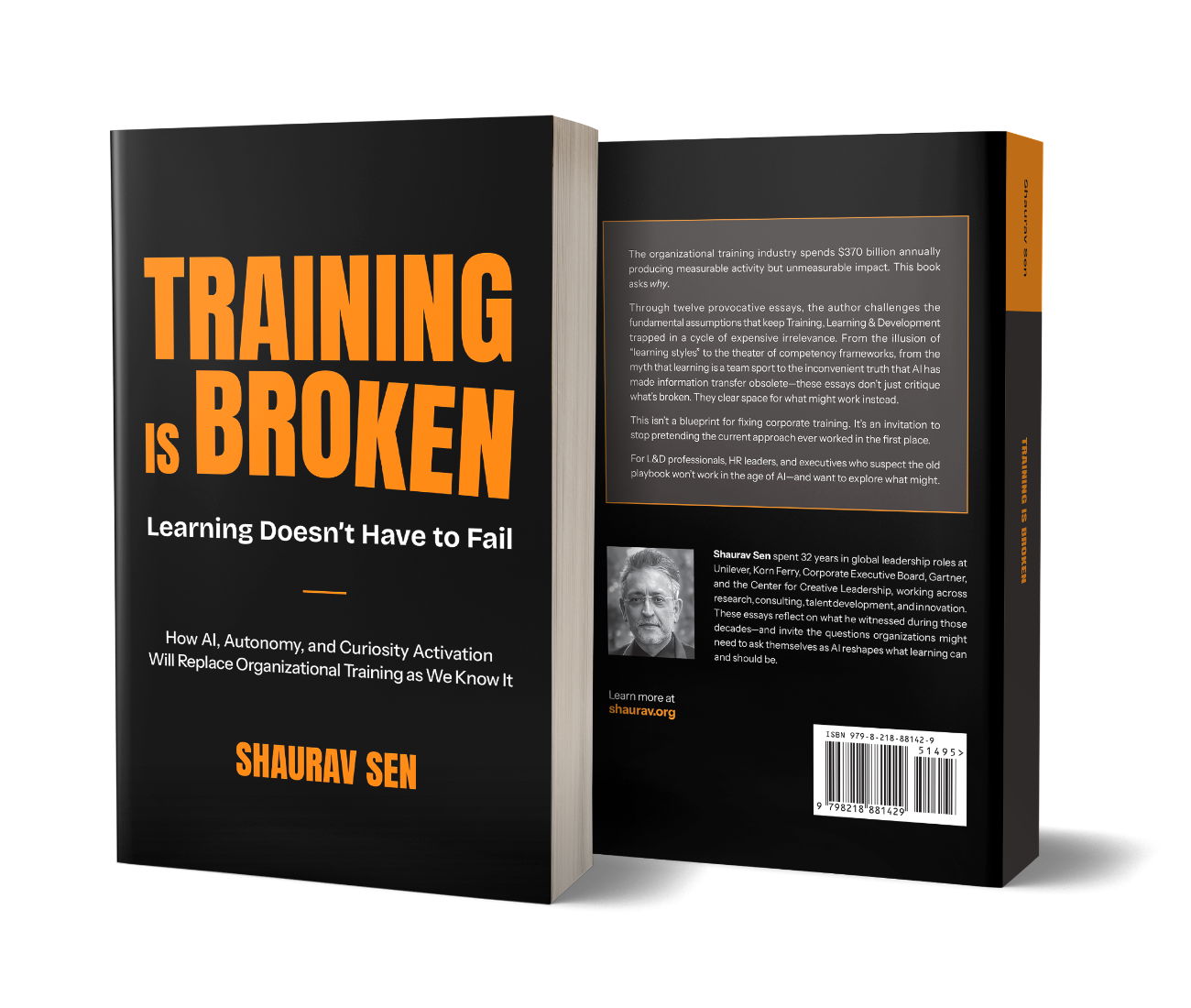
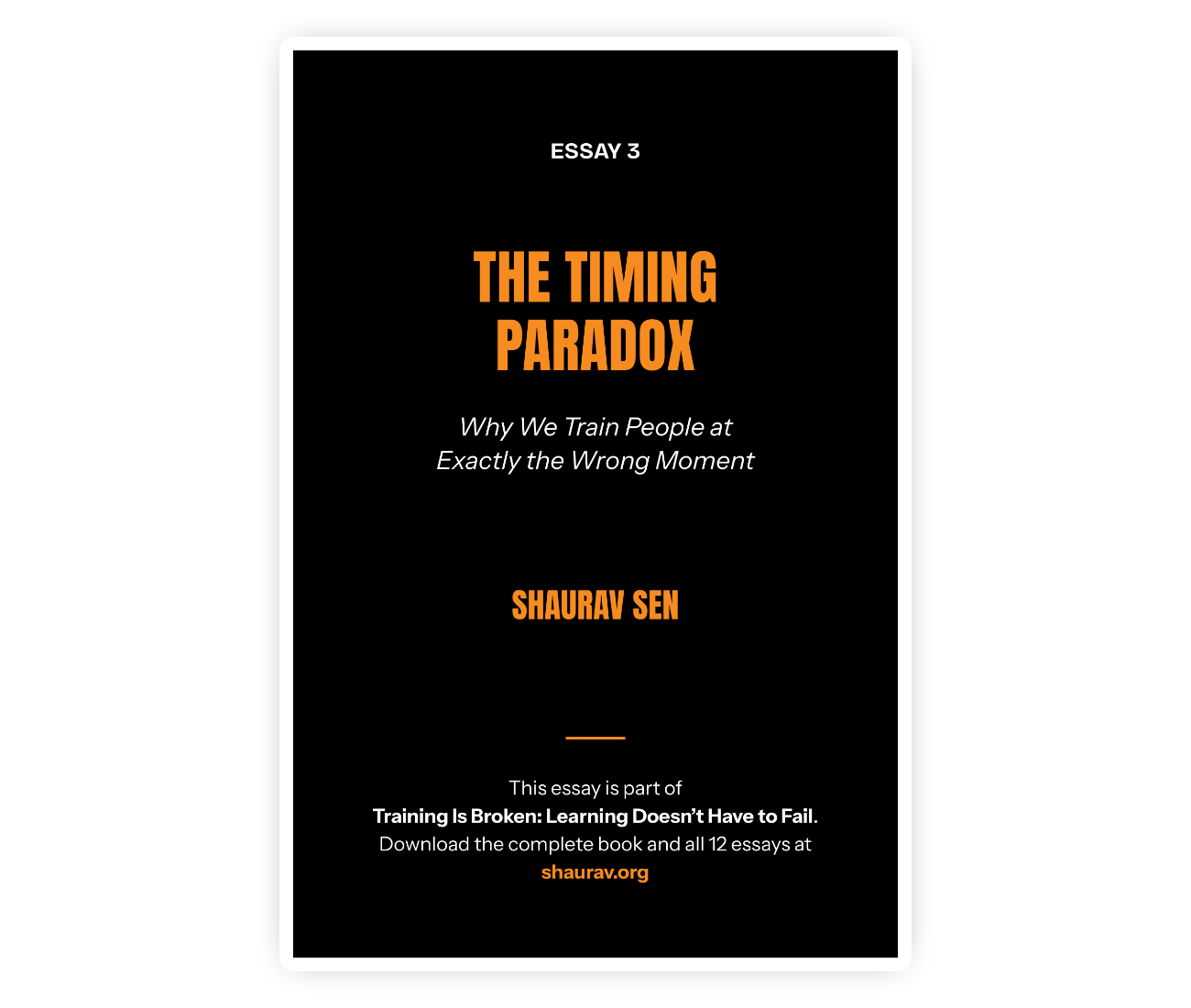
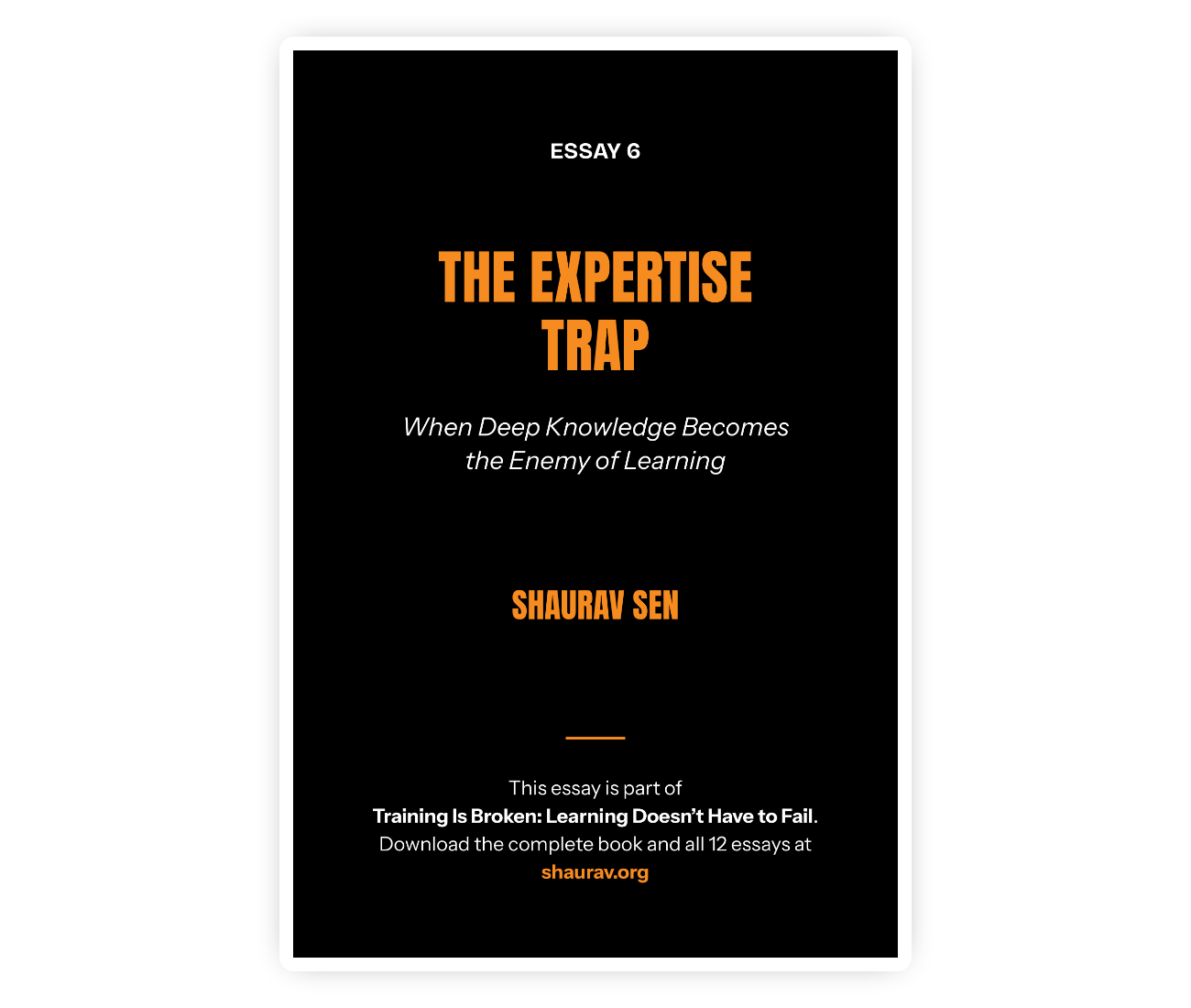
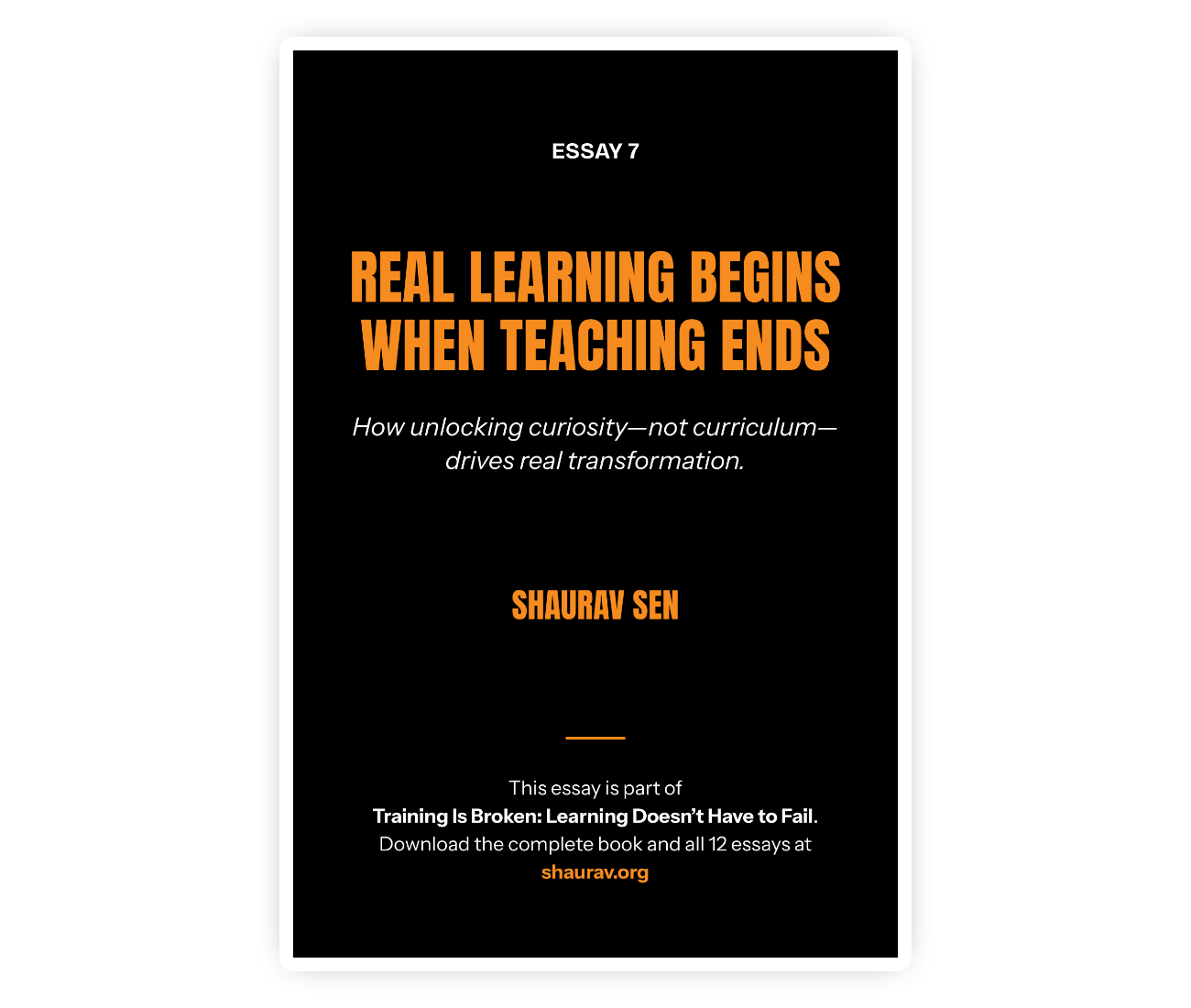
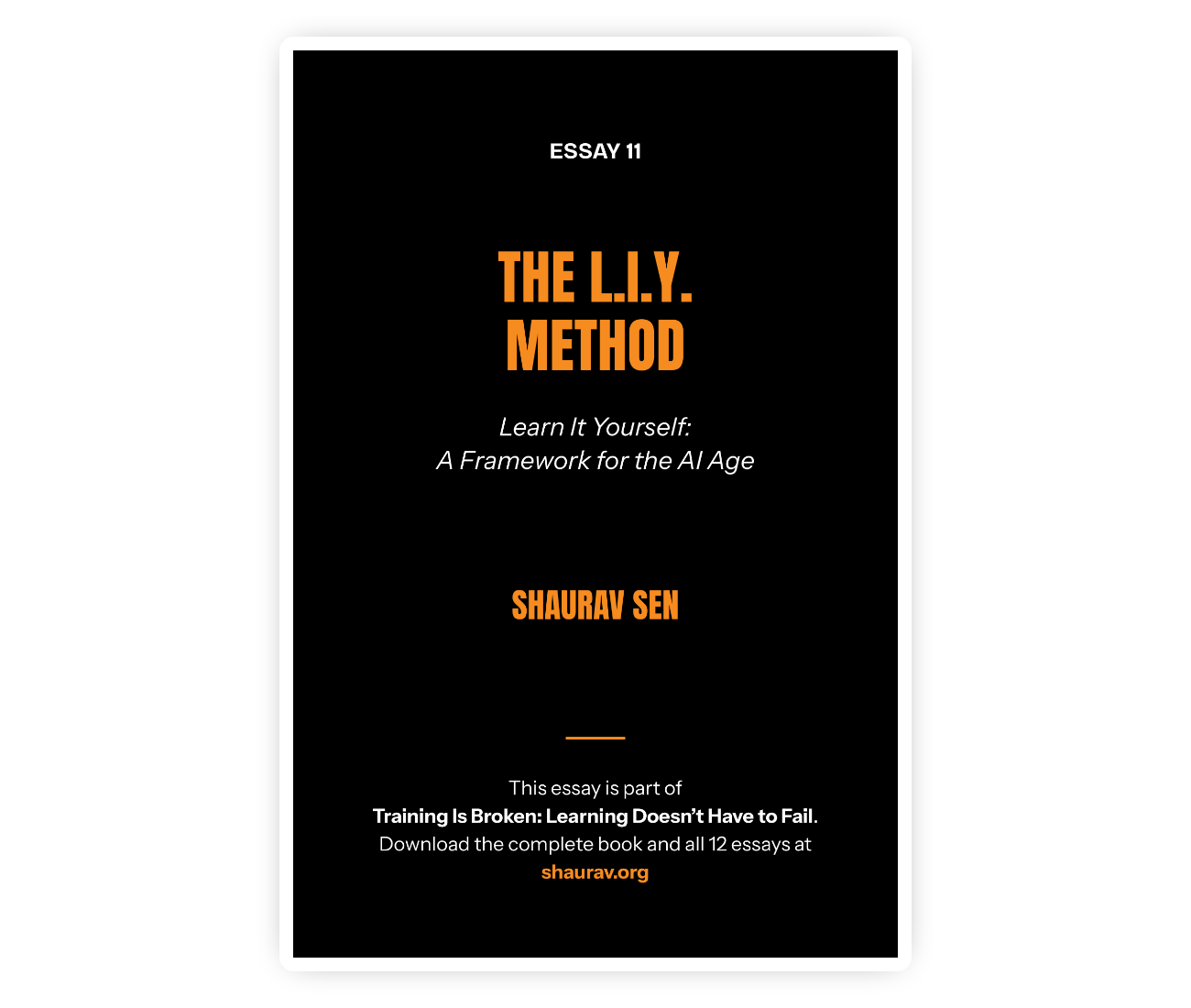
I began to wonder why most of our current approaches to training and learning are not geared to do this. And that's when I decided to dive deeper and take a hard, objective look at the world I was so much a part of—both as a consumer of learning but more critically as a provider and facilitator myself—and decided to compile the twelve essays you will find in this book. I realized that with the rapid evolution of artificial intelligence and what it makes possible, for the first time in decades, we have a real opportunity to change the way learning and training happens in organizations. AI not only exposes the fundamental flaws in our system today but offers incredible new ways for self-motivated and self-guided learning than ever before.
That is the core premise of this book. The book is not designed to provide you with guaranteed solutions to every training challenge you experience. Instead, it is meant to do 3 things: (a) surface what is not working and why; (b) spark internal debate and discussion on what must change; and finally (c) seed ideas for you to explore for your own organizational and personal context.
Nothing more. Nothing less.

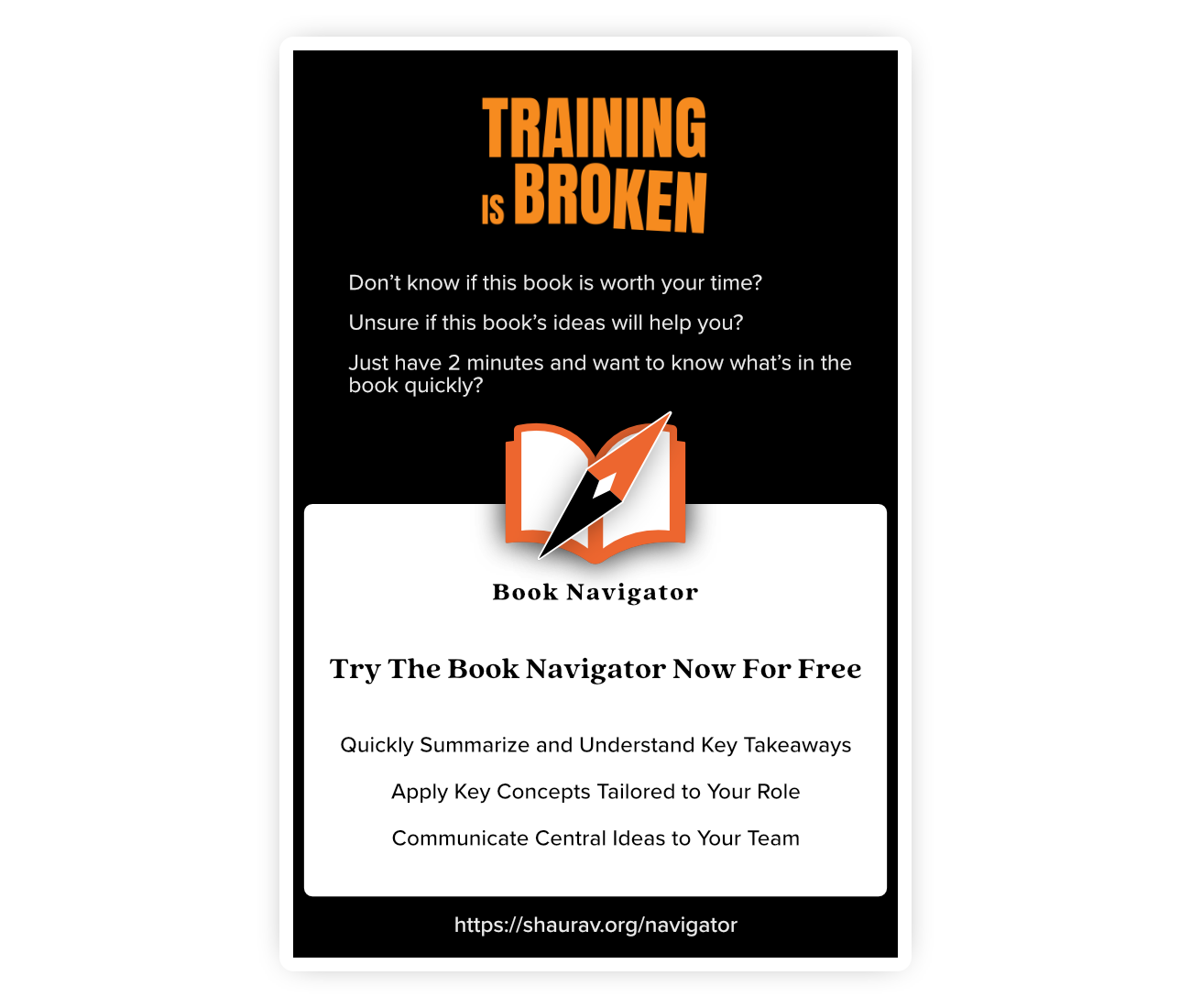
Book Navigator
Training is Broken
Time and attention are truly the scarcest resources in today's modern times. Despite our best intentions, we struggle to read through entire books and articles we so eagerly picked up or downloaded and fail to consider or apply the ideas contained within. Unfortunately, 99% of the best business books end up gathering dust without the reader having time to go through the entire content, or worse, not even understand how the book can help them in their context.
I don't want that to happen with this book.
The accompanying Book Navigator will help you quickly determine if you should even read this book at all or if the book is relevant, both as an individual and for the organization you are part of. It will help you quickly access the key ideas and insights that will help spark curiosity to dive deeper. It will help you communicate some of the ideas and opportunities in the book to your team and stakeholders—after all while learning is an individual sport as I argue in the book, the system of learning within organizations is clearly a team sport.
Try it. I think you will find it helpful.
Why the Book Is Free to Read
(And Why Ownership Is a Choice)
I’ve made this book fully available to read—cover to cover—without charge.
The same goes for the Book Navigator and supporting resources that help you find what's most relevant to you.
No paywall.
No sample chapters.
No catch.
I know that can raise an eyebrow. We’re conditioned to assume that if something is free, it must be worth less. Yet the global corporate training industry generates over $370 billion a year, and much of it fails to produce lasting behavior change. So the relationship between price and value is, at best, imperfect.
For this book, I wanted to try a different approach.
If learning is truly individual—if people learn best when they have agency and choice—which is the central theme of this book, then access shouldn’t be the barrier. The ideas need room to be explored, challenged, applied, and even disagreed with before their value becomes clear.
So the book is free to read.
If, after reading it, you find that it earns a place on your shelf—or that you want copies for your team—you can choose to own it in print or the Kindle Edition. Ownership is optional. It’s something the book has to earn.
This isn’t about rejecting value. It’s about letting value reveal itself first.
The only thing I’m asking you to invest upfront is your willingness to think differently. That’s always been the real cost of learning—and the real source of change. That's always been priceless anyway.
And yes, please do share it. If you know a leader, decision-maker, practitioner, or team member who might benefit from these ideas, pass it along. The goal isn’t distribution for its own sake—it’s to spark better conversations about how learning actually works, and what needs to change.